
99 Days of Something #6 – Academic Travel to think better
I haven’t been in a writing mood today. I haven’t updated my running blog (I haven’t run but I have cycled) and I haven’t written anything else either. I had basically given up getting anything down today. Some days are just not for writing it seems. Although I always feel better when I do write. But then I was scrolling through social media and saw posts from people I know heading to or having fun in San Francisco for one of the big Law conferences. I don’t want to write about conferences as such but it did make me think about all the places work has taken me that I might never have gone to otherwise. Don’t get me wrong, when I look back, a tiny fraction of conference trips were funded by work, most of them I paid for myself and even the ones where I did get funding, that mostly only covered part of the cost – so this isn’t about seeing the world and having fun on public money, in fact academics are the only group of people I know who routinely pay out of pocket to do parts of their job. And actually conferences are really hard work! Anyway, maybe more about actual conferencing another day.
I have been to some pretty amazing places to conferences, for fieldwork and for fellowships etc over the last 20 years. I got to spend time in Hamburg early on in my career which meant I got to spend lots of time with my Dad (because I stayed with him throughout the fellowship) and my Oma who loved me coming round for breakfast several times a week. I also got to see bits of Bulgaria and Poland as well as cities in Germany I had never been to during fieldwork. I have been to conferences and events in Warsaw, Salzburg, Oslo, Freiburg, Berlin, Brussels, Lund, Paris, Barcelona, Toronto, Montreal, Philadelphia, Washington DC, Mexico City, Brisbane and those are just the ones I can remember off the top of my head. In many of these locations, particularly those outside Europe, I have always tried to add a holiday to make it worth going that far. But even when I have only done the conference, I have always made time to see at least a little bit of the place. It’s a perk of the job in some ways because sometimes conferences give access to places you don’t otherwise get. For smaller events that might just be seeing the inside of the university hosting the event – but I love that. I love getting a sense of universities in other countries, the way they feel, what they show to the public and what you can glean from being behind the scenes a little, wandering corridors, reading noticeboards (where notice boards still exist) or looking at what pictures (if any) they choose to hang on their walls. Bigger events sometimes get you access to things historic buildings for drinks receptions or dinner, or special tours like the Supreme Court in Washington DC. It can also give you a very warped sense of a place though if you just stay in your conference bubble. There were a whole load of people who missed out on amazing street food in Mexico City because they never really ventured out from the conference hotel or recommended restaurants.
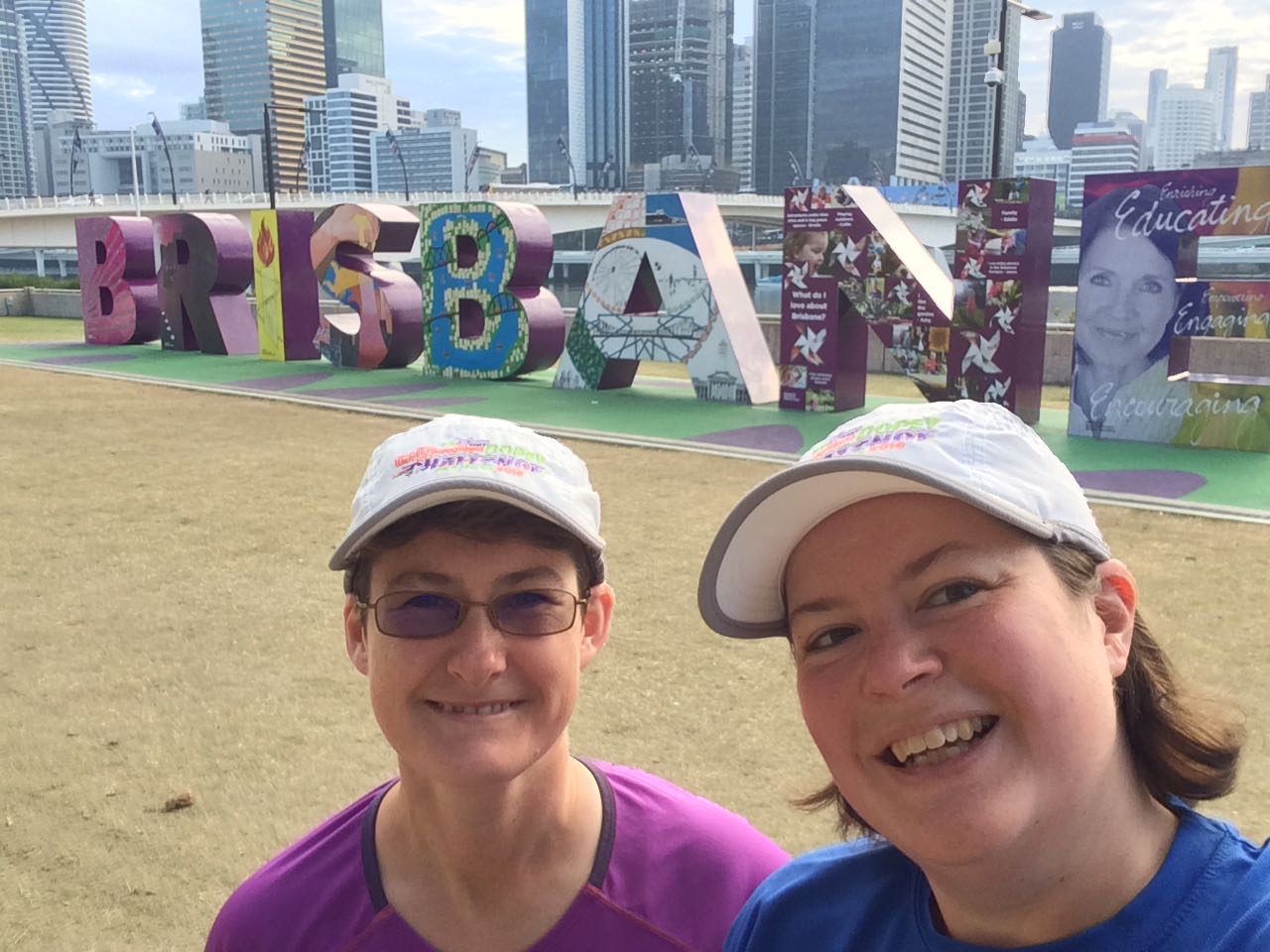

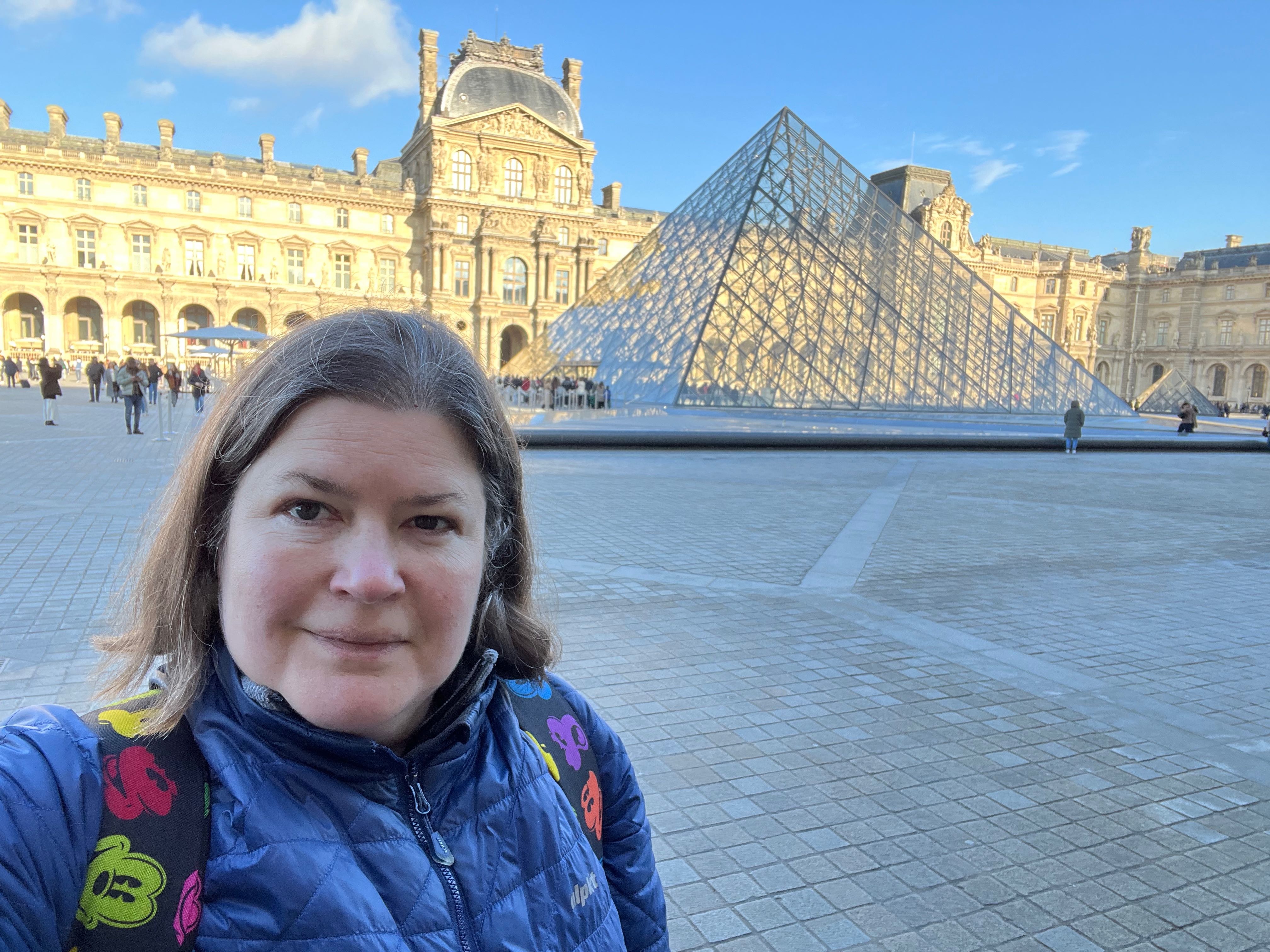
The overseas trips are of course often the ones that stick in your mind. The Brisbane conference was epic partly because it fell right in the middle of a 4 week Australia adventure that we designed around the conference. I had won a best paper prize which meant that the conference fee was waived and I received some money towards travel which basically paid for my flight. Anyway, most of my conferences and events have actually been UK based. I disproportionate number of them in London but UK travel has also seen my visit Edinburgh, Glasgow, Stirling, Cardiff, Swansea, Newcastle, York, Liverpool, Manchester, Nottingham, Leicester, Birmingham, Worcester, Stratford, Reading, Bath, Norwich, Brighton, and probably lots more I can’t think of now. I don’t tend to stay longer for UK events but I do often still try and see a bit of the place – that might be with a little tourist run or a walk. In some ways it is a great way to see little bits of a place which then means you can decide if you want to go back and actually spend some time there. I have a soft spot for Leicester because I was a student there. I’d never go there as a tourist but I will always jump at an opportunity to visit for work. Same for Birmingham. I would like to spend more time in Bath – good incentive to get on with the DBA, maybe a summer graduation with a day or two either side would be a nice way to spend a few days.
Anyway, what’s the point of writing this. Well, partly it just popped into my head that I have been to a lot of interesting places because of work and partly because it is a really good reminder that it’s not all about spreadsheets. Occasionally it can and must also be about exchanging interesting, exciting and complex and challenging ideas with other people who are interested in similar things, who can share their perspective and challenge your own. It’s about being asked and asking questions that make you re-think, tweak or abandon arguments, it’s about pushing each other to think differently and articulate more clearly. Not every conference achieves that but those that do go some way to rewiring the brain and changing the world for the better. For me that level of thinking, challenge, re-thinking and that level of clarity and focus is something I can rarely achieve when at home and doing the day job. It is something I know I struggle to achieve when attending events online. There is something about being in a physical space away from home and sharing that space with others and giving in to the intensity of the conversations and just rolling with it all in spite of imposter syndrome, in spite of sometimes not really understanding and in spite of always being completely over-peopled that makes my brain fire up. It’s where the magic happens. It’s where I am pushed to think better.
I hope all colleagues in San Francisco have an amazing time and come home buzzing with ideas and I wish the same to everyone else out there who has conferences or events coming up to challenge you to be better. Let’s accept that challenge and see where it takes us.
Society of Legal Scholars (SLS) conference Day 1
 I have not been to a Society of Legal Scholars conference for some time. I was looking forward to it. I was particularly excited to be able to go to all of the conference rather than just the half in which my paper was scheduled. I am doing 2 papers in the Legal Education section – more on those another time.
Travel to London was uneventful. I like uneventful. I got a fair bit of work done on the train in spite of the supposed quiet coach being the noisiest coach I have been in for a long time. Is it the thing where you’re told you’re not allowed to do something and therefore immediately want to do it? I got the tube out to Mile End and found the campus and even the right building very quickly. I also managed to get a ticket for the dinner at the end of day 1. I hadn’t booked because I wasn’t going to go but then the opportunity for a catch up with Richard C arose so I really wanted to go.
I had arrived in time for lunch – a rather ordinary pasta with a veggie sauce (I think there was a chicken one too) and then I headed to the first session. The first paper was great. I expected it to be. It was a paper by Marc Mason (Westminster) and Steven Vaughan (UCL) reporting on their research with LGBT+ barristers in England and Wales. Bonus points if you ‘get’ the title ‘Going to the Gay Bar, Gay Bar, Gay Bar…’ (if you do, your taste in music is as horrendous as mine!). The paper was fascinating and sort of heartbreaking and a little puzzling…. For a start the survey Marc and Steven did shows quite clearly that the Bar Standards Board statistics on sexuality at the Bar are hugely underestimating the number of LGBT+ barristers across the levels. That in itself means that there is something going on there because some are clearly happy to take part in surveys and interviews for research purposes but are not happy to declare their sexuality as part of the BSB statistics reporting. I wonder why that is. The paper’s sections on homophobia and on the performance of being out were fascinating. The data shows that homophobia is quite common but also that barristers play it down as nothing serious and no big deal. I’m really interested in this lack of advocating for themselves. Where does this come from. Is this a professional thing? Do they advocate for each other? This is fascinating and I’m not sure how we’d get to the bottom of this fully. I’ll ponder this.
I loved the notion that came up in one of the quotes about challenging or disrupting the ‘normal rule of engagements’. So men (mostly) finding it difficult to work out what exactly is going on when faced with a powerful lesbian QC, knowing something is slightly ‘off’ and not being able to work out what the rules of engagement now are. I like that. The section on performance of being out (or not) was depressing because there was lots of evidence of concealing sexuality and lying and because clearly there is a huge amount of the ‘bleached professional’ going on. Where barristers are ‘out’ they are often out in relation to their partners only – so they build their professional gay identity around having a same sex partner rather than on being gay – playing the ‘good gay’ game and performing heteronormativity albeit within a same sex relationship.
The second paper was by Ben Waters (Canterbury Christ Church) on ADR and Civil Justice. I also enjoyed this paper although it’s not really my thing and I was still reflecting on the previous one so drifted in and out.
Anyway it was a fabulous start to the conference. Next I was going to hear more legal education/legal profession stuff and listen to Nigel Duncan (City) on teaching legal ethics but over coffee I realised that I was really flagging. I decided to check into the accommodation and have a little power nap so that’s what I did. Then I headed back to the publisher exhibition area and spent a lovely half hour looking at books (sooooooooo many books, so little time to read….) and then people started filtering in from the sessions for the drinks reception. At the reception I met up with Richard C and we spent the evening talking about well being and anxiety in the legal academy and it was lovely. I left dinner when Richard did and then I went to bed early and fell asleep almost immediately. A good day and a sensible one! I have a blog post started over a year ago on conference self care and I think maybe now is a good time to look at that draft and finish it. I’ll see if I get to it today.
Thinking Clearly
Here’s post number 2 for Mental Health Awareness Week. I just wanted to share some thoughts about what I find most difficult about both anxiety and depression. I’m sure there are other things that other people find more difficult and I do think these things play out differently for different people but here’s a little part of my story.
As an academic I am used to my brain working. I am used to being able to think, analyse, critique… I am used to being able to string sentences together and I am used to working with complex ideas. I’m a lawyer; language, words, text, arguments – that’s what I do. So for me the hardest thing about anxiety has been the panic that sweeps into my brain like a tidal wave of chaos. It turns my brain into a jumbled mess of negative thoughts and emotions and turns off my ability to process those. I’m generally a little chaotic and a lot emotional and I often have more than one thought or idea at a time and I am always working on lots of things at one but I can also sit down and map, sort, collate and connect, link and compare. I can deal with lots of information and I can do it quickly but when anxiety hits it feels like I forget how. It’s not that I get overwhelmed with too much emotions or information, it’s that I lose the ability to order it. Do you remember the bit in the first Harry Potter book where Harry and Ron have to catch a key with wings and they’re in a room full of keys with wings. Imagine my thoughts and feelings as those keys and imagine that I am usually a fairly competent witch flying on a broom but when anxiety hits someone increases the speed of the thoughts tenfold and makes me fly into strong crosswinds. It’s disorientating and frightening because I can’t hold on to a thought for long enough to deal with it. I can’t dismiss negative ones because they whizz past and I can’t work with productive or positive thoughts because they’re gone before I know what they are.
When depression strikes my brain goes quite fuzzy. I feel like Winnie the Pooh – a bear of very little brain, like there’s just cotton wool between my ears. It means that even thoughts I can hold on to, I can’t process properly. I can’t follow arguments or thoughts all that well. I don’t understand. As an academic that is terrifying. At my worst I have picked up my own work and haven’t been able to follow my own argument. I have had people talk to me and I have literally had no clue what they were saying. It’s like everything is presented in a language that uses the same words as English but they mean something different. Actually it’s a lot like having a conversation between sociologists, lawyers and political scientists – we often use the same terminology but mean something different. So maybe I’m not depressed, maybe I just do too much interdisciplinary work. (I am not being serious here – obviously. There is no way my depression addled brain could do interdisciplinary work and untangle the nuanced use of language. I can only do this when I’m well).
Because thinking clearly is so important to what I do and who I am, it’s the not being able to think clearly that I find the hardest about suffering from anxiety and depression. It also means that I often notice it coming because my ability to think deteriorates. That’s a good thing I suppose, it means I can try and stop it. More thoughts tomorrow maybe.

