Skip to content

Posts tagged ‘life’

15
May

What does Rest Actually Look Like?

I realised this week that I have clearly forgotten how to rest. I know the answer to the question posed will be very different for us all but I have been thinking a lot about rest this week, partly because I am really struggling to rest constructively. I am on annual leave so that might be why it has come into focus now but actually, I have been thinking about rest and what that actually means for a while. I have been thinking about rest and recovery in running (for how that is or isn’t going, pop over to my running blog), about rest during busy work days and weeks and rest during periods of annual leave or even just weekends. The thing is, I am incredibly good at doing nothing but awful at resting. I sleep a lot, that’s probably a good thing for rest but that’s where the positives end really. I am trying to remember when I last felt properly rested and I can’t really remember. I am as prone to doom scrolling as the best of us and I can loose hours doing absolutely nothing in a pretty mindless way. I can be a bit all or nothing with pretty much everything. Running is a good example lately – back to back days, going all in for a few days or weeks and then nothing for a while. Same with yoga, the gym, strength training. It’s also the same with writing for example – lots all at once with focus that makes time vanish and then nothing…I can work long hours and then crash out. And some of this is just how I work. I like intensity and then down time, I work better in bursts, I feel sharper, more focused and frankly just better at what I do when I do it in intense bursts. The problem isn’t intensity, or the peaks and troughs. The problem is that in an academic role, in the current state of the sector, that intensity never gives. My nervous system has learned to stay at the intensity, the bursts aren’t bursts, they’re constant and the peaks aren’t followed by troughs, there’s just another peak. Downtime has all but vanished. I have forgotten how to properly rest. Maybe we all have collectively. And by rest I absolutely do not mean crashing out in front of the TV or scrolling through endless reels that tell us how to get our life back on track after a workday filled with adding more things to the to do list than you ticked off it.

So what does rest actually look like for me? Can I remember? Let’s start with running and the physical rest needed to run well. The all or nothing approach to exercise obviously doesn’t work. I used to not only know this but also understand it in a way that allowed me to listen to my body much more than I do now. Through marathon training, and particularly through the 2019 Dopey Challenge training, I really understood the difference between good tired and dangerous tired. I knew when to rest and the rest was intentional, mindful and constructive. It was build into the plan so my initial cues came from the plan but I also quickly adapted to being ok with extra rest days, shortening distances or splitting them over two runs, adjusting weights if I didn’t feel strong or doing some additional yoga if it felt good, adding some time on feet if I felt fresh. In addition, the training, even the really long miles, felt like a rest from work. The physical effort provided the counterbalance to the brain effort of work, the movement the anti-dote to sitting most of the day. I appreciate that as I am getting older and now that I am far less fit, I need to adjust the training, I need longer to recover in-between workouts, I can’t run hard on back to back days and expect to feel great. But I am struggling to settle into a rhythm that works because nothing feels quite balanced and because I don’t, on any level, feel rested. Physical rest and mental rest are so linked for me (and probably all of us) that when I am not mentally rested, I can be as physically rested as is possible but I will still feel tired, grumpy and unable to commit to the exercise. Tired for me is rarely physical – but when it is regularly, everything is better. So I think the first thing to note about rest, is that I feel most rested when I am settled into a rhythm that somehow balances work, exercise, the outdoors, whimsical play and silliness and some sort of creative outlet which could be writing or could be reading or listening to music or whatever. That balance is hard to achieve and sometimes achieving that balance feels like another thing to do which then makes it not a balance at all but a chore.

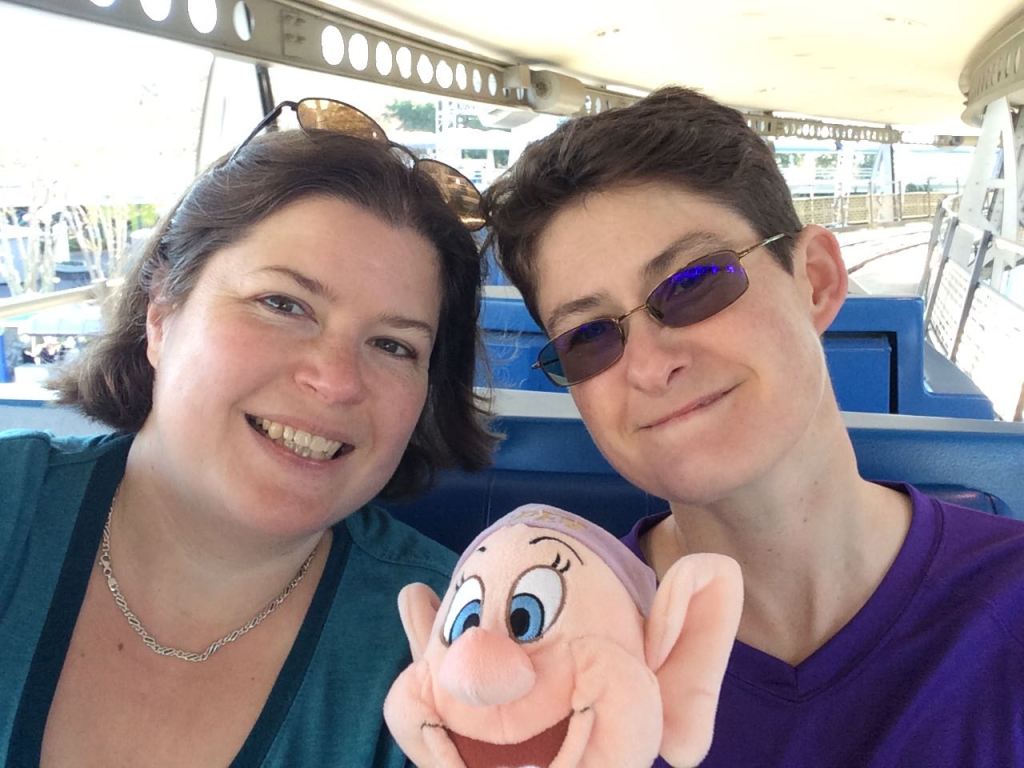
During this week off, we have been trying to sort some photos so that we might eventually catch up a bit with photo books. We have mainly been looking at the Disney photos from 2023 and 2025. What strikes me looking back at those pictures is how tired we look in both sets. In 2023 we were so tired that we didn’t start the marathon. We were dangerous tired. In 2025 we didn’t start the marathon either but we had completed the first 3 days of the Dopey Challenge. Of course for both we were under-trained but that wasn’t the main reason for not starting those races. We were not properly rested. We were dangerous tired and most of that tiredness was mental. As it happens I did injure my knee during the half in 2025. Probably not a coincidence. Anyway, on both occasions, we came back a little more rested but not re-set. On both occasions we didn’t really break the intensity cycle. I contrast that with earlier trips and maybe particularly the 2019 trip. Physically I am not sure I have ever been as tired as I was during serious Dopey training. But it was good tired. It was tired that could be slept away. It was the sort of tired that was directly linked to physical activity, not the sort of tired that just is. Of course we were physically tired after running 48.6 miles in 4 days but at the end of the trip, I also felt more rested than I probably have since then. Mentally we went into the trip far less tired and we came back rested. I think even further back to our Australia trip in 2018. We took all of July and we saw lots, experienced lots, did lots, and came home glowing and rested and happy.

Today, Friday and the last day of my week off (I am working an applicant visit day tomorrow) and I finally feel like my mind is not constantly being pulled back to work related things. Given the state of my un-rest (deliberate choice of the word here), I don’t think a week at home is enough to re-set and actually get to rest. I am still in the shutting down apps phase before you even get to full log off never mind re-start. Things that have helped me this week have been LEGO builds, focusing on being present with the cats, morning coffee outside breathing in the cool spring air and some gentle exercise. I thought I would write and read a lot more but I didn’t want to. I didn’t feel like I had the concentration. I also thought I would scroll less and play more, be more whimsical but somehow, I don’t feel like I really got there, like I really came down from the intensity of the world for that to happen. I stayed, mostly, in serious mode. A week is not enough for a system re-set. But a week is what I have had. So I do need to think about what rest looks like in the day to day. Of course that includes longer periods of not working but if I go into those, like I have into this week and so many trips over the last few years, on high alert, exhausted and stuck in intensity mode, they are not going to be enough to establish and keep a balance. It can’t be all or nothing because that’s not rest, that’s a crash. And we’ve done the burn out and crash thing a couple of times now – not fun, not something I want to repeat.

So what might rest actually look like day to day. My job is not going to get any less intense. I could of course just leave the job – and actually, I really could but bizarrely, despite everything, I don’t actually want to. I actually like quite a big proportion of my job. So if the job won’t get less intense, I need to learn to rest within that intensity. I need to look back at the things that used to work for me and re-learn them. The first is maybe to limit work to it’s place. It’s just a job. I can both care deeply about it and still see it as just a job. I am an academic. It’s part of my identity and who I am but it is not everything. I am really good at my job, sometimes maybe it’s ok to say no, to not people please and to let opportunities whoosh past in the way that generally declines do now. I think I will put a new post-it note on my computer to remind me that it is just a job. If I can contain work better, I create space for the other restful things: Having an exercise plan that is built around constructive rest (yes I know how that sounds but it works) and not giving work my best time are two obvious ones. I like early mornings, I want to spend them sipping coffee in the sun with the cats roaming around. I do not need to be at my computer at 7am. Other things I sort of reserve for days off when there really is no need. I like the play and type of concentration required by building LEGO sets. I like the whimsy of arranging the built sets in our house. We have so many large scale sets, why not have one on the go and do a little bit each day (again, it does not have to be all or nothing, I don’t have to build everything in a day!). I love how regular yoga makes me feel, so why not get on the mat every day instead of scrolling. I miss reading for pleasure. Maybe I need to buy more trashy novels to just get lost in terrible stories and accept that not every book I read has to do anything intellectual. Maybe sometimes my brain needs flawed story telling that is easy to read and requires no thought. All easily said and easily written down. Not always easy to do. A tired mind full of un-rest easily lies to us, I am easily convinced that the best place is the sofa – it probably rarely is.

To answer the question I started with, I don’t think I know what rest looks like for me at the moment. I don’t really understand the whims of this perimenopausal body, it’s energy fluctuations, random aches and pains and non existent temperature regulation. So figuring out physical rest around exercise is going to take a little time. As for mental rest and feeling rested, I need to unlearn some bad habits and re-learn some good ones. I was better at the ebbs and flows of academic life – I think maybe partly because there were ebbs and flows in the job where there are none now. But I was good at taking time back, thriving in intense periods and slowing down, being more playful in others and I did that in much shorter and sustainable cycles. Maybe it was easier in more junior and teaching focused roles than it is now, maybe the sector has got worse but the basics should still work. The intensity of the job hasn’t dropped at all since last summer, and it won’t. But mine has to. Maybe saying that out loud, putting it down here is step one to taking one little step at a time to real constructive rest that involves far less doing nothing and much more mindful and deliberate being in the doing of whimsical, playful and ultimately restful activities. The pictures dotted throughout this blog, show some of the things that made me smile and pause this week. They are the things that matter.

How do you rest? Help me learn again.

21
Feb

Student outreach work – why bother?

I have got a few things I want to catch up on – and you’ll be pleased to know it is not another Heated Rivalry post. It feels like I spent most of January asleep and most of February trying to wake up and catch up. I have not caught up, of course I haven’t. If I could actually catch up, that would suggest I don’t have a full time job… anyway. In the middle of my flu sickness absence, just as the coughing and snot production switched into crippling fatigue and stomach issues, I had a couple of days of almost coherence. Those two days coincided with the HELOA Conference I had agreed to go speak at with my absolutely brilliant colleague Jack Cooper. Here’s the blurb from the conference programme:

1.6: Working with academic colleagues to deliver effective outreach – Ballroom

Jack Cooper | Schools and Colleges Engagement Officer | Leeds Trinity University

Dr Jess Guth | Head of School of Business and Law | Leeds Trinity University

Engaging subject-level outreach is crucial to building meaningful relationships with schools and colleges and helping to breakdown barriers for students to access Higher Education. In this workshop, Jack Cooper, Schools and Colleges Engagement Officer and Dr Jess Guth, Head of School of Law from Leeds Trinity University will talk through their collaborative approach to designing and delivering high-impact subject outreach.

Honestly, I don’t really remember giving the talk that much. I remember struggling to breathe and being tired and struggling to hold onto thoughts. I also remember Jack being a really good presenter and setting the scene really well. In essence the argument was that Universities doing outreach work with Schools and Colleges is important for a variety of reasons – social justice, raising aspiration and widening access and participations and of course recruitment. I think I was the only academic in a room full of professional services staff. I think often running outreach sessions, travelling to schools and colleges or welcoming them to campus feels like another thing dumped on academics, another thing to do that doesn’t feel like it is really our job, something to be got out of. I have certainly worked with academics with attitudes like that over the course of my career. We argued that the relationships between the professional services team and academic staff is key to doing good, meaningful and effective outreach. We encouraged participants of the workshop to think about what they do, why, if it works, how it could be better and what maybe just needs to be stopped. It seemed to go well. It is also the only conference ever where, as a speaker, I received a thank you card.

Since the conference I have had cause to think more about outreach work for several reasons. One is that we are in the craziness of the student number planning cycle, workload planning and thinking about how many students we will have and when, where and how to teach them. Another is that I have recently received the outreach impact report from Jack’s team. As I have been working through spreadsheets my mind has been wandering off thinking about 2 different things in relation to outreach work: The first is a question about why I have never seen it as an add on. Even as a baby academic, I loved doing outreach sessions, I genuinely enjoyed going into Schools and Colleges, chatting to potential students, learning from their teachers. And I still do. But why? The second is about why we do this work and how we know if it works.

So first, why do I like this work? I think it is because I have never seen it as a recruitment activity as such. Of course that is usually how it is positioned for a university like mine. We need to be visible to the 17/18 year olds in our region. We need them to choose us. We are not a selective institution, we have to actively recruit. I understand that the outreach work is basically that. But to me it has always been the other stuff that matters more. I am a teacher at heart and outreach work is teaching. I have stood in so many classrooms in Keighley, Bradford, Leeds, Birmingham and surrounding areas and seen how the stories I can tell about my journey into Law or my friends’ journeys to university and beyond changes the perception of what is possible.

I taught a Law class at a local 6th Form in Keighley about a decade ago and was confronted by an angry young woman. She said ‘Why are you here? People like us don’t go to university. Go tick your boxes somewhere else’. I didn’t know what to say to her. I let her get in my face, I let her storm out. I said nothing when she came back in. I could have told her that I did my A-Levels in Keighley and I went to uni. Many of my friends grew up in some of the most deprived areas of Keighley, an already pretty poor town, and went to uni. I have told that story so many times and it always helps shift perspective. But somehow confronted with that anger, it didn’t seem right. It felt like I, we, had somehow got out and left a generation behind. We hadn’t made it better for those who came after us. It seems that the older I get, the more the ‘I sat where you are sitting now and look at me know’ narrative just feels smug and patronising. As I finished my session, I asked whether I could go sit with the angry young woman for a bit and ask her some questions. Of course her initial response was ‘Why do you care’. But she didn’t leave. In the end we talked for about 20 minutes. She wanted to be a lawyer but was already being told she needed to get that nonsense out of her head and go get a job. Finishing School was a luxury, going to university was outrageous. There was no money to support her, there was no understanding about what a university was, how it worked or what might be possible. I tried to explain, as best I could because I realised that explaining universities is hard – they’re weird! I can’t say that she was friendly but she was curious, she asked lots of questions. Then I left. I didn’t hear from her again. I don’t know what she is doing now but I do know that she went to a very prestigious university to study Law – her teacher told us. I think about her often. I hope that whatever she took from our conversation, she used it to help her get to where she wanted to be. She changed how I think about outreach work. It’s my opportunity to understand where today’s kids, tomorrow’s students, are in terms of their journeys, their understanding of what the future holds, their views on the world and their expectations of what comes next. She taught me to never assume anything and be prepared to abandon prepared sessions and activities and to focus on connection. Conversation is more important than content. Creating a space where the basics of degrees, universities, legal institutions and careers can be talked about without feeling embarrassed at not knowing and showing up in a way that makes clear that there are people out there, strangers at this point, who believe in them and are willing to take a chance on them are the most important things. I’m not there to persuade them to enrol with whatever university I happen to be working for – although I love seeing familiar faces arrive for welcome week – I am there to help them realise that the power to change their world is right there for them to grasp and if they let us in just a little bit, we will be right there with them.

Outreach work helps me design better transitions from College to Uni, it helps me create better teaching materials and use better examples, it helps me meet my students where they are and it makes me a better teacher. It also reminds me of my own privilege and the distance that can create and it reminds me that making the world a better place is our job and that while if often feels that way, it doesn’t have to be overwhelming. Even if it is just the one student encounter described above (and I think there are more), I am honoured to have been part of a little nudge that propelled her to jump into, what was for her and her family, a terrifying unknown, but one that had the potential to change her life. I hope it did.

I think in answering the first question, I have also answered the why we do it question. I guess I can’t speak for others but in summary, I do it because it changes the world for the better. Does it work? I don’t know. I know from the impact data that we have, that our outreach work generates applications for our courses. So for those who do it purely from a recruitment point of view – it seems to work. Does it change the world? Does it shift perspectives on what is possible? It often feels like it but actually I will never really know what impact I have. I like to think that sometimes I make a difference, that I am part of the spark that puts into focus that nothing is impossible and that whoever you thought you were, you deserve to go after your dreams. I don’t need data to tell me that I am helping to raise aspirations, creating the possibility to imagine a what if. And to be clear, I don’t care whether that what if is about becoming the next hot shot lawyer or rocket scientist or about living off grid and being self-sufficient or about finding your person and raising a huge family – or all of those things at different points in time. The power lies in the confidence to define your own what ifs. I know the power of being given the confidence and freedom to figure out my what if. I grew up in an environment where there was no real pressure to do well and no pressure at all to do anything specific, just lots of support for figuring out my dream and then living it. If I can be a tiny little bit of that for one or two kids I am lucky enough to cross paths with in those Schools and Colleges, then yeah, outreach work works.

1
Jan

Do what you can, when you can

Well, Christmas is safely packed away in the loft. According to my fitness watch I both finished 2025 and started 2026 strong. Actually, I did no such thing. I finished work on the 19th December, I had a pretty quiet time but it has really taken me until now to feel even remotely rested. I finished 2025 slowly recovering from exhaustion and being at capacity for too long. The first day of 2026 has been the same. With Christmas decorations taken down, the house returned to its normal, though not yet fully cleaned, state, my thoughts turned to going back to work. I go back tomorrow, I suspect many academic friends and colleagues will go back on Monday.

Anyway, I think almost every year I have done some work over the Christmas period. I thought I would this time. I have some writing projects to progress, stuff to do that is nice, fun. though still work. But I didn’t. I didn’t log on at all. I didn’t read anything work related, I didn’t write anything work related and I haven’t really thought about it much at all. Until today. Because now suddenly it feels like I need a plan for tomorrow and that means knowing what needs doing urgently… and so I nearly logged on. And then I gave myself a good telling off that may have included some swear words and ‘idiot’.

Starting back after the break on a Friday is actually perfect. Tomorrow I make the plan, I get things in order and ready for Monday. Preparation for work is work. It can be done in work time. And of course I forgot the key thing, the thing that I try as much as I can to stress to colleagues, PhD students and anyone who will listen really: Nothing in our job is ever actually urgent. Nobody is standing by us bleeding from a major artery, nothing is literally on fire, nobody is in immediate danger. I deal in words on pages, arbitrary deadlines, reports nobody reads… I am not saying that what I do as an academic isn’t important – some of it is – but we put the urgency into the work we do. The work is not inherently urgent. In fact I think that maybe the work would be better if we took any urgency out of it. If we properly slowed down. We need to keep reminding ourselves and each other of that.

Anyway, I have already rambled more than I intended to! I really just wanted to post to wish you a calm, peaceful, creative and kind 2026. I know that in an academic world that is in such a mess, that wish might seem out of reach, ridiculous even, but we have to try. There is hope, there are amazing people working in universities doing amazing things in spite of the conditions we have to survive in. There are people who are actively trying to improve those conditions – on large scales or through tiny acts of solidarity and resistance. Higher Education has lost its way, that doesn’t mean all those within it have. Resistance is exhausting, it takes its toll, demands a price.. whatever cliche you want to throw at it. So this is a sort of rallying cry but it is one that I have been thinking since I used the phrase in a post for my running blog earlier today: Do what you can, when you can. If we all do what we can, when we can to reclaim at least some of what Higher Education can be, maybe we can make some progress and maybe more of us can return to really enjoying our work more of the time.

Happy New year from me and my furry mental health team: Storm, Kilian, Odin and Einstein. Take care of each other.