
Feeling seen, feeling the history and feeling the possibilities
I have lost count of the number of Law Schools I have walked into over the years. I have obviously studied in and worked at several. I have visited many many more. But I can count the number of Law Schools I have walked into where the walls have been dominated by portraits or photos of women. Until earlier this month that number was precisely zero. One of my more famous (read public) tantrums came in one of my previous roles where, in a staff meeting, we had agreed that we should brighten up the hallways in the Law School with some law relevant pictures. A week or so after that meeting I arrived at work and pictures of long dead white men adorned the walls and I lost the plot. It was not one of my finest moments but I do think I was right. I am not suggesting that we erase history or that we should ban Law Schools from putting images of dead white men on their walls, I am saying that we should be mindful of whose history we are portraying, who we are championing and what it means if you can or rather if you can’t see yourself reflected in the imagery that the place you are working or studying in chooses to put on the walls.
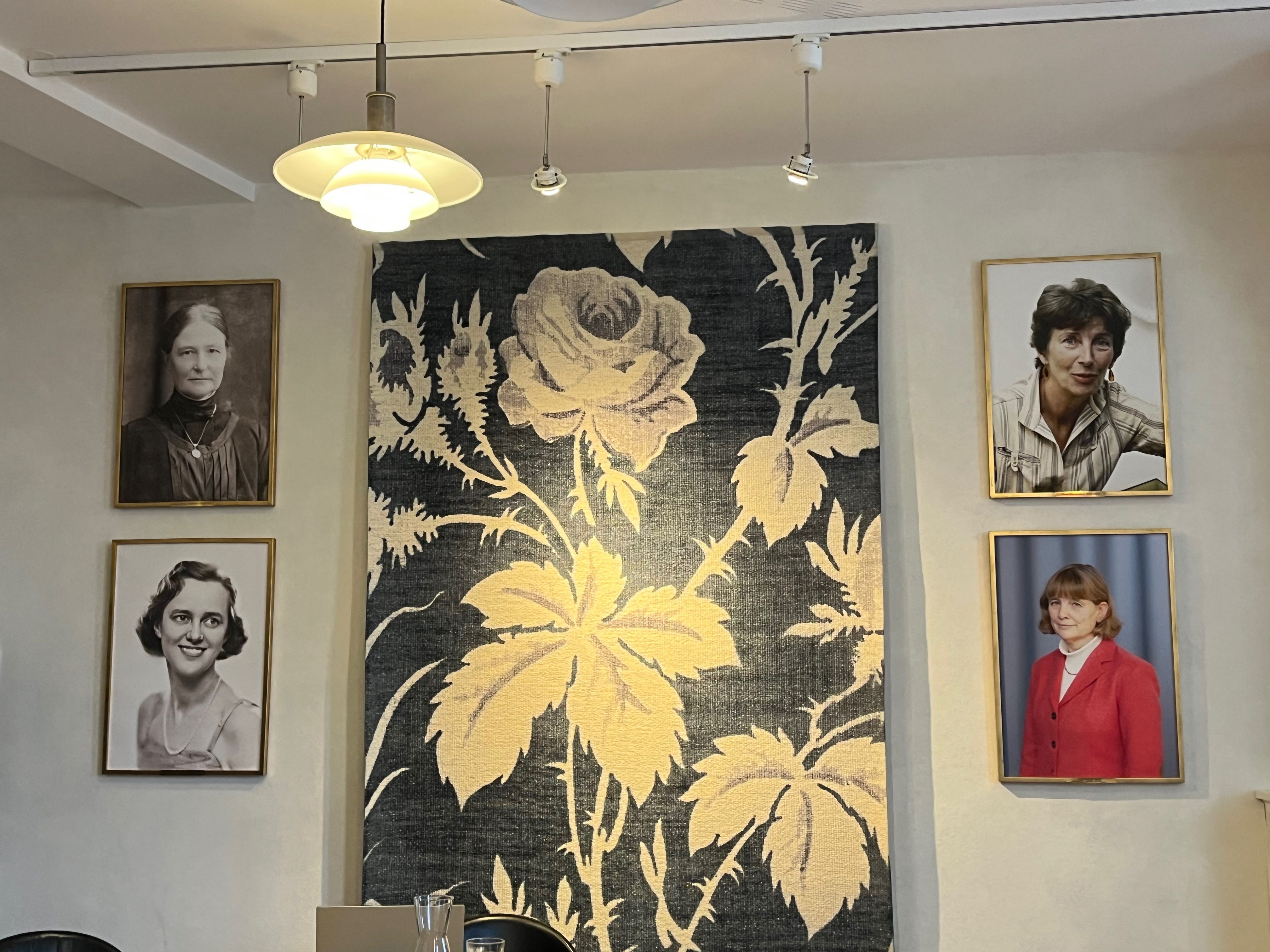
So when, on the 12th February, I was ushered into a smallish room in the Law Faculty of Lund University alongside a group of academics working on various aspects of EU Law, Policy and Politics for our 2 day workshop, my breath was literally taken away. As I made my way down a few steps, I was facing pictures of 4 women. I had no idea who they were at this point but the impact felt almost physical. The room screamed ‘you belong here’. There we were, mostly female academics being encouraged by those who went before us, those who made us being here possible. The 4 women are Anna Bugge Wicksell (1862-1928), Gunvor Mallin (1911-2010), Anna Christensen (1936 – 2001) and Christina Moëll (1959 -) and they are important and impressive figures in the Swedish legal world. Look them up! The Svenskt kvinnobiografiskt lexikon which has biographies of important Swedish Women is a good place to start.
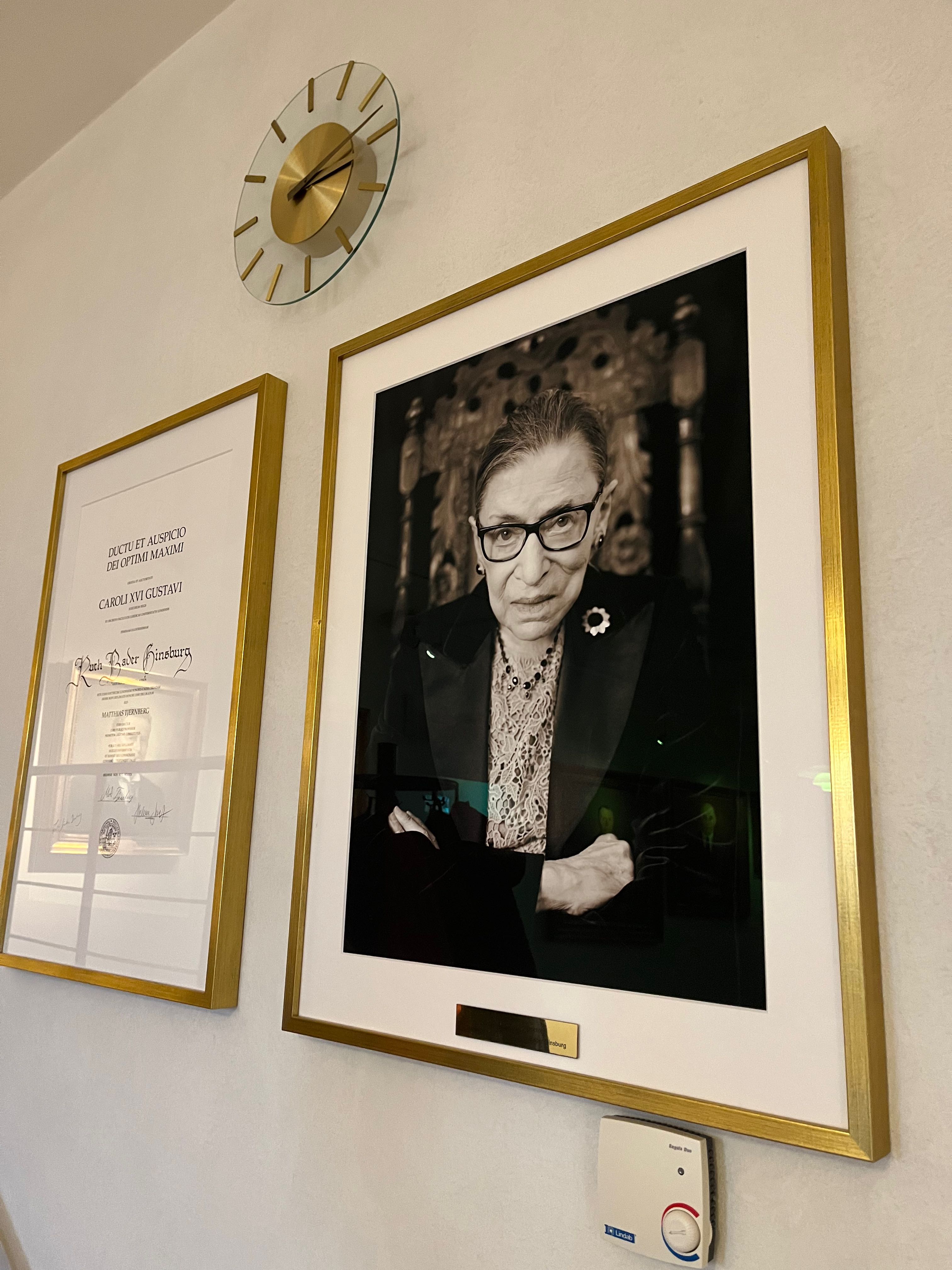
As I took my seat and looked back at the door I had just come through, I noticed a further picture. And this time I did know who the woman looking back at me from inside the frame was: Ruth Bader Ginsburg. I think I just stared. As it turns out RBG received an honorary jubilee doctorate from Lund University and the document is framed next to her picture. It was vaguely intimidating to give a paper with such a legal heavyweight, such a trailblazer, such a brilliant woman looking down at me with that iconic look but I hope she would have been proud of us and interested in our discussions.
Having the women on the walls made a difference. It is hard to explain why. Apart from immediately making me feel like I belonged in that room, genuinely. Apart from being in a room with pictures of important people on the walls and for once not having to roll my eyes about the choice of who is important and apart from the complete novelty of it, I don’t know why it made such a difference. It just did. It was nice and over the two days I think we all commented on it.
It made me think about the importance of representation which I have been thinking about lots lately but also about how far we have come since we saw the first female law graduates, the first female lawyers, first female professors, Deans of School… and how far we still have to go. There are still female firsts to be had and that’s before we even start thinking about intersections with other characteristics. But thinking about how much work there is still to do seemed less heavy with the 5 watching over our conversations. There they were, evidence of change and progress, evidence that we belong, that we are capable and important. I like how they are all different, the pictures chosen are not all the same style and they are not super formal either. They somehow felt more real and their roles and positions somehow more attainable. Ok, perhaps not RBG because, you know, she was RBG – but the others were just women doing their thing – just like we were in that workshop. It felt like by being there and by discussing work that had a focus on gender, we were honouring the work they had done, the way they had paved. It felt good to be seen, to see, to begin to understand our histories and think about the possibilities.
Turns out there were also some paintings of men on the walls – they were behind me throughout, I don’t know who they were, I didn’t bother to check. They just didn’t seem important over those two days. They probably are important, but not in this story and not today.
 My Conversations