
Feeling seen, feeling the history and feeling the possibilities
I have lost count of the number of Law Schools I have walked into over the years. I have obviously studied in and worked at several. I have visited many many more. But I can count the number of Law Schools I have walked into where the walls have been dominated by portraits or photos of women. Until earlier this month that number was precisely zero. One of my more famous (read public) tantrums came in one of my previous roles where, in a staff meeting, we had agreed that we should brighten up the hallways in the Law School with some law relevant pictures. A week or so after that meeting I arrived at work and pictures of long dead white men adorned the walls and I lost the plot. It was not one of my finest moments but I do think I was right. I am not suggesting that we erase history or that we should ban Law Schools from putting images of dead white men on their walls, I am saying that we should be mindful of whose history we are portraying, who we are championing and what it means if you can or rather if you can’t see yourself reflected in the imagery that the place you are working or studying in chooses to put on the walls.
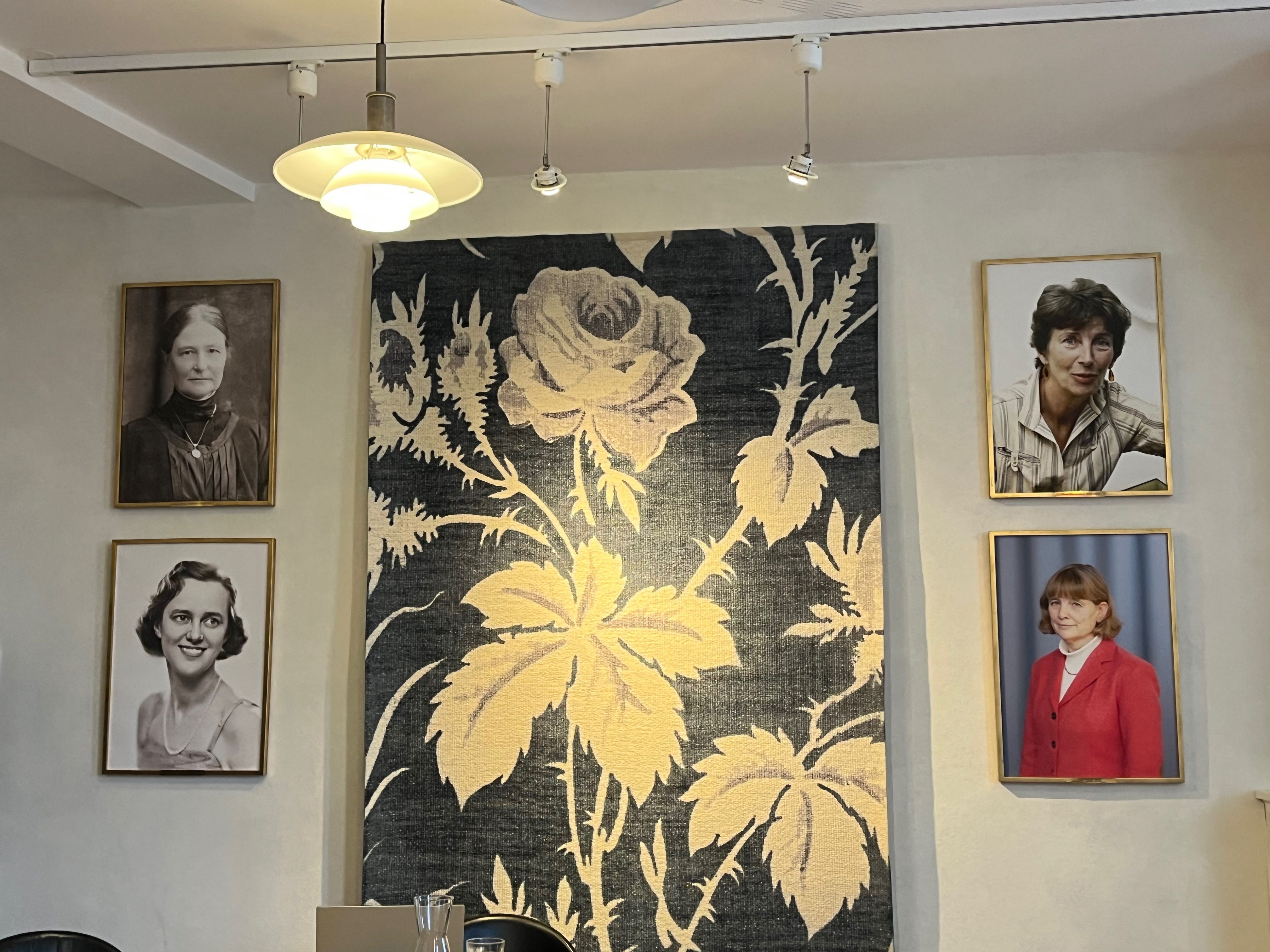
So when, on the 12th February, I was ushered into a smallish room in the Law Faculty of Lund University alongside a group of academics working on various aspects of EU Law, Policy and Politics for our 2 day workshop, my breath was literally taken away. As I made my way down a few steps, I was facing pictures of 4 women. I had no idea who they were at this point but the impact felt almost physical. The room screamed ‘you belong here’. There we were, mostly female academics being encouraged by those who went before us, those who made us being here possible. The 4 women are Anna Bugge Wicksell (1862-1928), Gunvor Mallin (1911-2010), Anna Christensen (1936 – 2001) and Christina Moëll (1959 -) and they are important and impressive figures in the Swedish legal world. Look them up! The Svenskt kvinnobiografiskt lexikon which has biographies of important Swedish Women is a good place to start.
As I took my seat and looked back at the door I had just come through, I noticed a further picture. And this time I did know who the woman looking back at me from inside the frame was: Ruth Bader Ginsburg. I think I just stared. As it turns out RBG received an honorary jubilee doctorate from Lund University and the document is framed next to her picture. It was vaguely intimidating to give a paper with such a legal heavyweight, such a trailblazer, such a brilliant woman looking down at me with that iconic look but I hope she would have been proud of us and interested in our discussions.
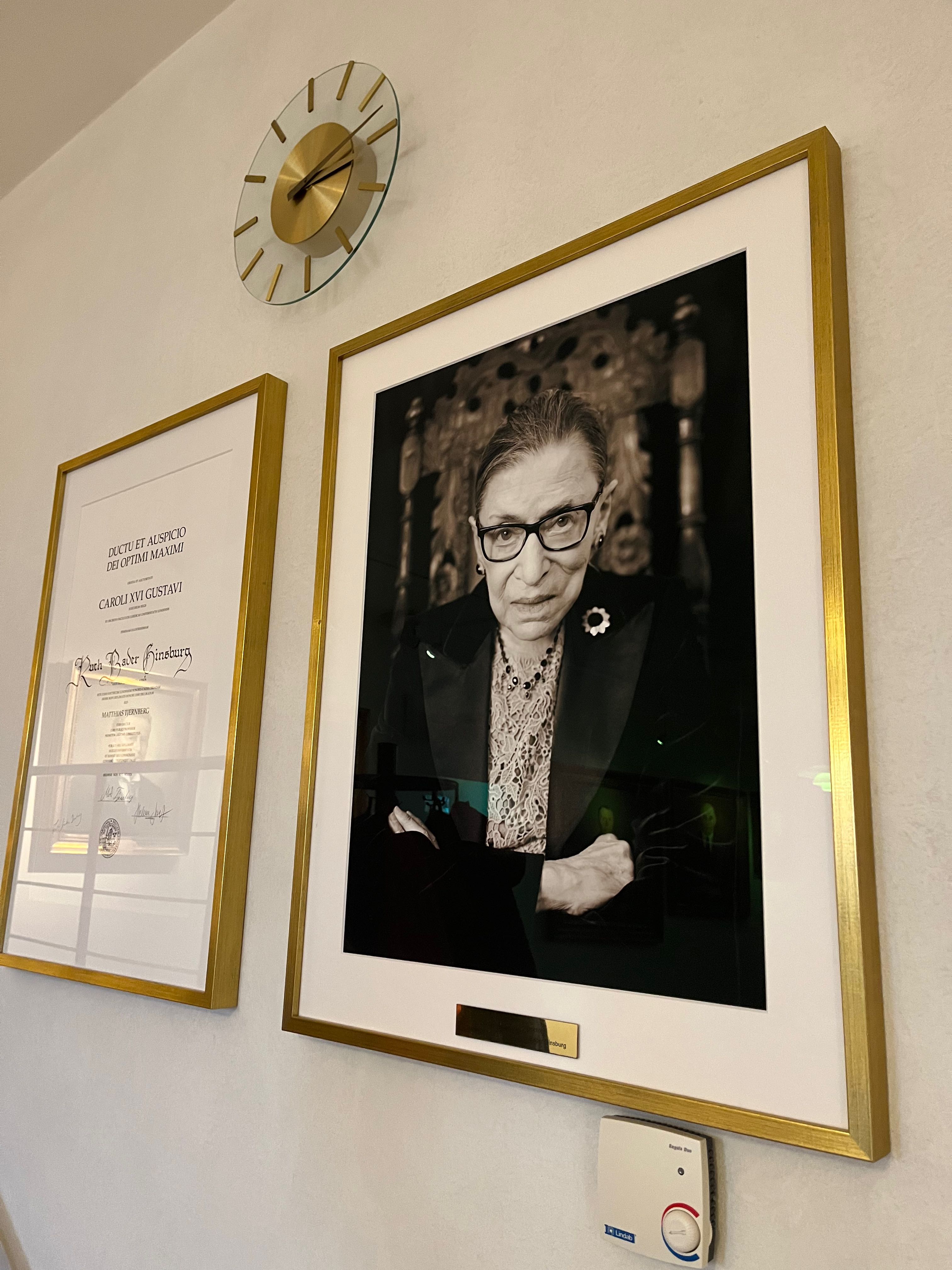
Having the women on the walls made a difference. It is hard to explain why. Apart from immediately making me feel like I belonged in that room, genuinely. Apart from being in a room with pictures of important people on the walls and for once not having to roll my eyes about the choice of who is important and apart from the complete novelty of it, I don’t know why it made such a difference. It just did. It was nice and over the two days I think we all commented on it.
It made me think about the importance of representation which I have been thinking about lots lately but also about how far we have come since we saw the first female law graduates, the first female lawyers, first female professors, Deans of School… and how far we still have to go. There are still female firsts to be had and that’s before we even start thinking about intersections with other characteristics. But thinking about how much work there is still to do seemed less heavy with the 5 watching over our conversations. There they were, evidence of change and progress, evidence that we belong, that we are capable and important. I like how they are all different, the pictures chosen are not all the same style and they are not super formal either. They somehow felt more real and their roles and positions somehow more attainable. Ok, perhaps not RBG because, you know, she was RBG – but the others were just women doing their thing – just like we were in that workshop. It felt like by being there and by discussing work that had a focus on gender, we were honouring the work they had done, the way they had paved. It felt good to be seen, to see, to begin to understand our histories and think about the possibilities.
Turns out there were also some paintings of men on the walls – they were behind me throughout, I don’t know who they were, I didn’t bother to check. They just didn’t seem important over those two days. They probably are important, but not in this story and not today.
100 Days of Wonder – #5
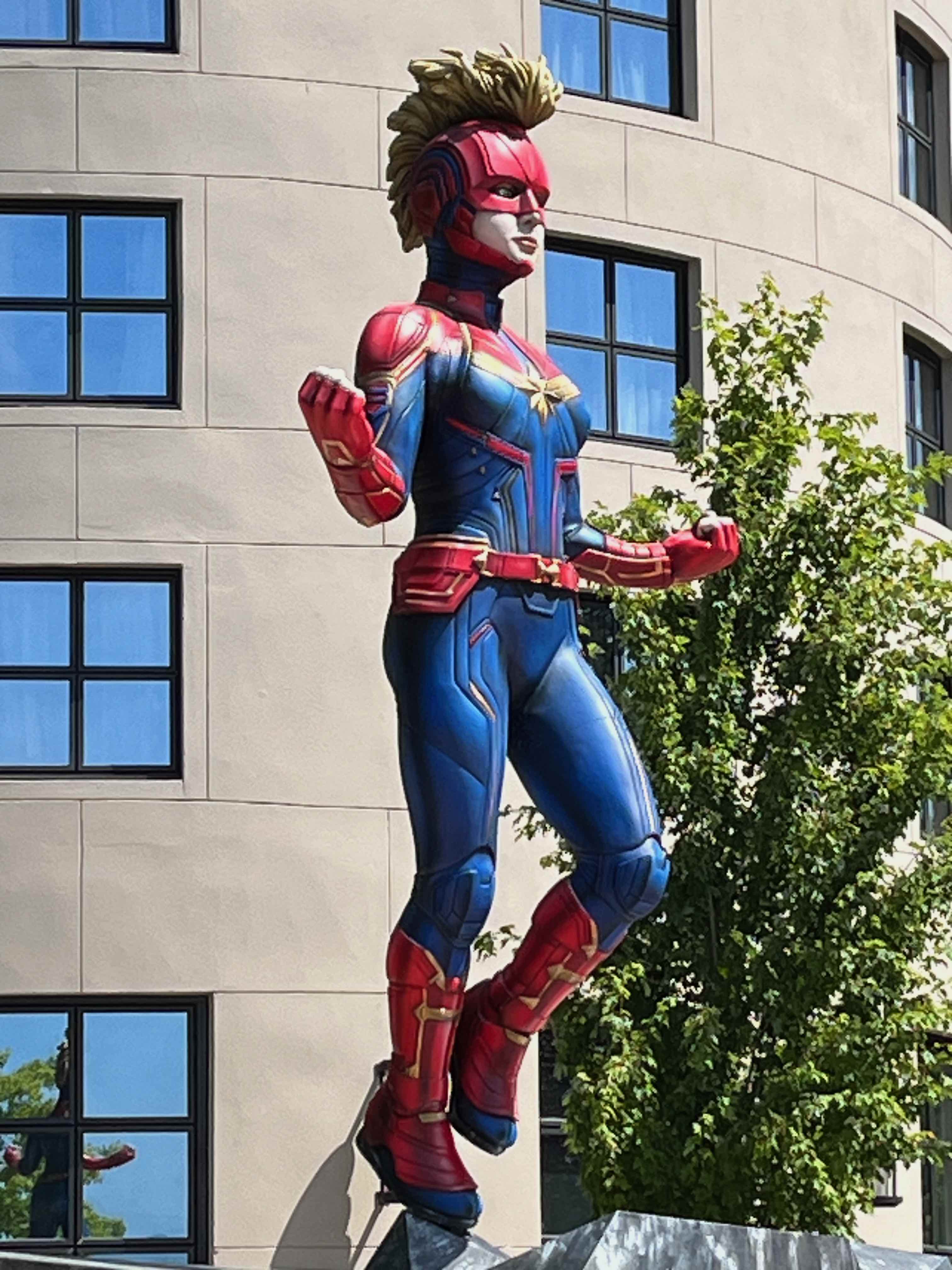
When I was a child it never occurred to me that there might be something I couldn’t do or be because I was a girl. Gendered toys and activities just weren’t consciously a part of my life and the idea of women being disadvantaged and the implications of living in a patriarchy hit me much much later, embarrassingly later, like in my very late teens later. I had wonderful strong women around me in real life and in the books I devoured. Although the last point might not be true. Maybe the heroes of my books weren’t girls or women, or at least not often, maybe I just didn’t care or really notice. Maybe in my fantasy world it really didn’t matter and in my imagination I could be whoever I wanted to me in whatever story I was in. But that was my imagination, encouraged by those around me to run wild without constraints of being told that something wasn’t for me. Seeing strong, flawed, complex, real female characters on screen gives me joy, (and I am not saying Marvel characters always have all of that) but not necessarily just because representation is important for those whose imagination isn’t allowed to run wild. It gives me joy because I can close my eyes, give a nod to the 7 year old me and tell her ‘The world catches up with what you already know eventually – everyone can be a superhero’.

Gender and the CJEU
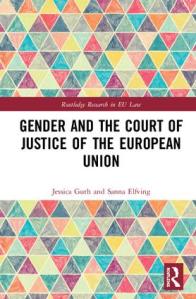 I’ve been meaning to do this shameless self promotion post since our book was published but somehow never got round to it. But now we are waving the summer off and are hitting the new academic year hard it seems sort of ok to do this. I’m not really keen on the ‘yay look at me’ stuff so this post is really about the book and the process of writing it. If you happen to want to persuade your library to buy a copy or two that would of course be awesome too! You can find it on the Publisher’s website here.
So the book. Well it’s basically an examination of the Court of Justice of the European Union and its work on a couple of substantive law areas and it is written from a feminist perspective. In writing the book we were interested in understanding the role gender plays in the CJEU’s work. The first half sets out our approach and the background – composition of the Court, how it works etc and the second half looks at gender equality case law, equality case law more generally and citizenship case law. If you do read it, we’d love to hear your thoughts on it.
I am really proud of this book – not necessarily because of the content and the writing, I can already see plenty of ways it could all be improved – but because it was such a genuine collaboration and joint effort which proved that collegiality is alive and well and because we were able to work with one of our undergraduate students and use sections of her dissertation as part of our research. It was such a privilege to work with Dr Sanna Elfving who I had appointed and who is an absolute star and with Sophie Mayat, a fabulous former student particularly because I missed supervising most of her dissertation while off sick with depression and anxiety just before I left Bradford. It was amazing to see the hard work she put in and the genuinely high quality research, thinking and writing that she produced.
I learned a lot during the writing of that book. First, it always takes longer than you think it will, a lot longer. Second, I need to work with people who have much more patience than I have a right to ask for. I will at some point in the process fuck up and/or fall off the wagon and I need to trust my co-authors to stick with me, call me out, catch my mistakes and point me back in the right direction. That means they need to have incredible patience and they need to be able to cope with me being a bit of a control freak (ok a lot). Sanna deserves a medal. Third, working with someone who works very differently from me is great. The writing process was really interesting. It seems I map out, Sanna inserted tons of information, I edited, Sanna sorted the references. I had the big picture in my head, she took care of the detail. We are good at different things and that means we can focus on the things we like and are good at but all of it still gets done.
I think the key thing I learned was that a book needs to be really strictly mapped out. We had way too much material and trying to work out how to do it all justice caused some of our issues about structure and the overall argument. Once we decided we would just have to leave some of it out, it actually came together well. We have a couple of ideas for some of the stuff that didn’t make it into the book and definitely have more to say on the subject.
Writing a book is a long slog and I thought that it might be like a PhD or running a marathon – you have to forget the pain before you can even begin to think about doing anything like it again – but actually I’d like to write another one, it was overall a really enjoyable experience. Sure, it had its moments but it was also fun. I have a couple of ideas but lots of research work to do before I can begin to really put pen to paper (probably actual pen to actual paper) but watch this space.
 My Conversations